
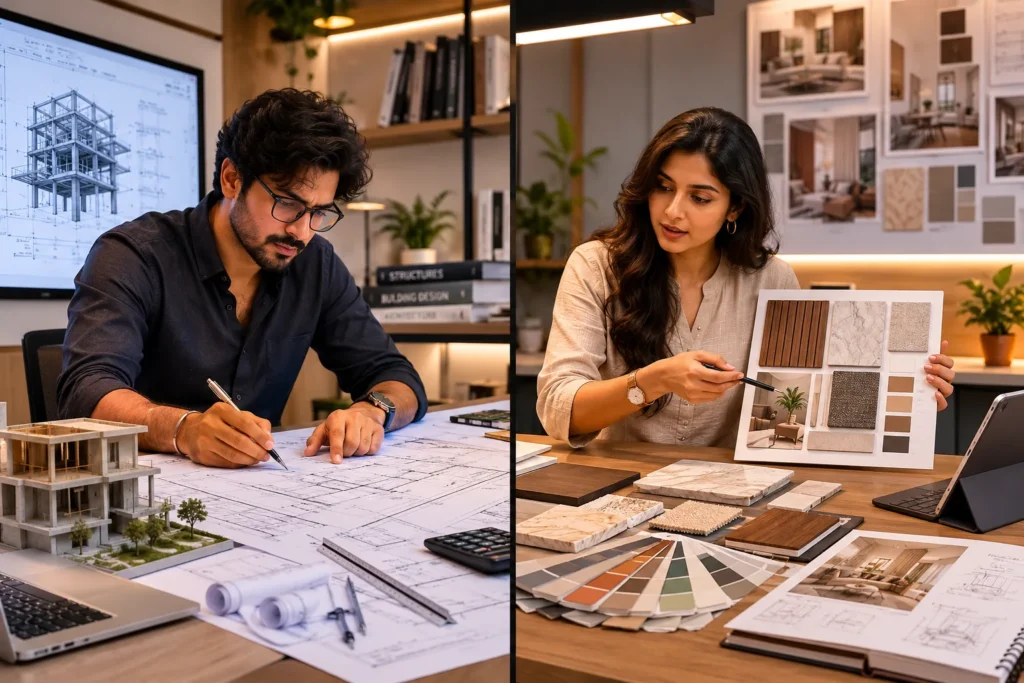
The question of interior designer vs architect in Bhopal is one that almost every homeowner, business owner, and property developer encounters at some point in their project journey. It is a question that generates a surprising amount of confusion, largely because the roles of architects and interior designers overlap in some areas while being fundamentally different in others, and because the terminology is used loosely and inconsistently in the Indian construction and design industry.
The confusion has real consequences. Hiring the wrong professional for your specific project needs wastes time and money, and sometimes results in work that does not meet legal requirements or does not achieve the design quality you were aiming for. On the other hand, understanding exactly what each professional brings to a project allows you to make a confident, well-informed decision about who to engage, when to engage them, and how their work should relate to each other.
This complete guide answers the interior designer vs architect question comprehensively for Bhopal homeowners and business owners, covering what each profession does, where they overlap, when you need one versus the other, and when you genuinely need both working together.
Understanding the Two Professions
Interior Designer vs Architect in Bhopal – The Core Distinction
The single most important distinction between an architect and an interior designer is the boundary between structure and space. Architects work primarily with structure, the design of buildings as physical objects in the world, their form, their structure, their relationship to the site, and their compliance with building regulations. Interior designers work primarily with space, the experience of being inside a building, the way rooms feel and function, the materials and finishes that cover surfaces, and the furniture and objects that inhabit the space.
This distinction is real and important, but it is not absolute. Many projects require thinking that crosses this boundary, and many professionals have skills that extend beyond the formal definition of their role. Understanding the boundary, and where it becomes permeable, is the key to making the right decision for your Bhopal project.
What an Architect Does
An architect is a licensed professional trained in the design of buildings as complete structural and spatial objects. In India, architects must hold a degree in architecture from a recognized institution and be registered with the Council of Architecture to practice legally. The scope of an architect’s work typically includes:
Structural design, determining how a building is constructed at a fundamental level, including foundations, columns, beams, load-bearing walls, and roof structure. This is work that has direct implications for safety and is governed by building regulations requiring professional qualification.
Building permits and regulatory compliance: preparing and submitting the drawings and documents required to obtain construction permissions from the Bhopal Municipal Corporation or other relevant authorities. In Bhopal, any new construction, significant structural modification, or change of building use typically requires architectural drawings stamped by a registered architect.
Site planning: determining how a building sits on its plot, its orientation, its relationship to adjacent buildings and streets, its access points, and its relationship to services like water, drainage, and electricity.
External building design: the form, facade, massing, and appearance of a building as seen from the outside.
Spatial planning at the building scale, determining the overall arrangement of rooms, floors, and circulation within a building.
What an Interior Designer Does
An interior designer is a professional trained in the design of interior spaces, the experience of being inside a building rather than the building itself as a structural object. In India, interior designers typically hold a degree or diploma in interior design from a recognized institution, though unlike architects, they are not required to be licensed to practice.
The scope of an interior designer’s work typically includes:
Space planning at the room level, determining how furniture, built-in elements, and circulation are arranged within rooms to maximize functionality, comfort, and aesthetic quality.
Material and finish specification, selecting the flooring, wall finishes, ceiling treatments, and surface materials that create the sensory character of each space.
Furniture design and selection, both custom-designed built-in furniture like wardrobes, kitchen cabinets, and TV units, and loose furniture like sofas, dining tables, and beds.
Lighting design, planning the number, type, position, and quality of light sources in each space to create the appropriate atmosphere and functionality.
Colour palette development, selecting and coordinating the colours used across all surfaces, furniture, and accessories in a space.
Accessory and decor curation, selecting the artwork, plants, cushions, rugs, and other decorative objects that complete a designed space.
Project management during interior execution, coordinating carpenters, painters, tile layers, electricians, and other trades to deliver the designed interior on time and to quality.
Where the Roles Overlap
The overlap between architecture and interior design in Bhopal projects creates the most confusion and is worth addressing directly.
Both architects and interior designers engage in spatial planning. An architect designing a new home plans the arrangement of rooms within the building. An interior designer planning a home interior arranges furniture and built-in elements within the rooms. These are different scales of spatial planning, but they require similar analytical and creative thinking.
Both architects and interior designers make decisions that affect the sensory experience of a space. An architect’s decision about window size and placement affects how natural light enters and moves through a room. An interior designer’s decision about curtain material affects how that light is filtered and diffused. Both decisions matter to the final quality of the experience of the space.
Both architects and interior designers use three-dimensional visualization tools to develop and communicate their design proposals. The software and technical language may differ, but the underlying process of imagining, representing, and refining three-dimensional space is shared between the professions.
Some professionals in Bhopal hold qualifications and practice skills in both areas. An architect who has developed strong expertise in interior design and execution, or an interior designer who has a strong understanding of architectural structure and building systems, can bring both perspectives to a project. At Ravo Interior, our team’s design expertise spans the interior environment comprehensively, and we work in close collaboration with architects on projects that require both structural and interior design input.
When You Need an Architect in Bhopal
Understanding when your Bhopal project legally and practically requires an architect saves time and prevents the expensive mistake of starting work without the necessary regulatory approvals.
New Construction
Any new building construction in Bhopal, whether a residential house, a commercial building, or an industrial facility, requires architectural drawings stamped by a registered architect for building permit purposes. You cannot legally build a new structure in Bhopal without engaging a registered architect to prepare and stamp the regulatory submission drawings.
Structural Modifications to Existing Buildings
If your project involves any structural modification to an existing building, you will need an architect. Structural modifications include removing or relocating load-bearing walls, adding or removing floors, making new openings in load-bearing walls for doors or windows, changing the structural use of a space, and any other intervention that affects the structural integrity or load path of the building.
This is one of the most common situations where Bhopal homeowners incorrectly assume an interior designer can handle the entire scope of work. An interior designer can tell you that removing a wall would improve the spatial flow of your living area. An architect is the professional who determines whether that wall is load-bearing, designs the structural intervention required to remove it safely, and prepares the regulatory drawings for approval.
Change of Building Use
In Bhopal, changing the designated use of a building or building portion, for example, converting a residential property to commercial use, or converting a warehouse to an office, typically requires regulatory approval that necessitates architectural involvement.
Extensions and Additions
Adding a floor, extending a building footprint, or adding a significant enclosed structure to an existing building are all projects that require architectural involvement for both structural design and regulatory approval.
When You Need an Interior Designer in Bhopal
The vast majority of interior design projects in Bhopal do not involve structural changes and therefore do not legally require architectural involvement. For these projects, an interior designer is the appropriate professional to engage.
Complete Home Interiors for Existing Flats and Houses
The most common interior design project in Bhopal is designing the complete interior of a flat or house that already exists structurally. This includes all flooring, wall finishes, ceilings, kitchen design, bathroom design, wardrobe and storage design, furniture selection, lighting design, and decoration. None of this work requires structural intervention, and an interior designer is the appropriate professional to lead the entire project.
This applies to new possession flats where you are designing the interior from scratch before moving in, to existing homes where you are renovating and updating the interior, and to rental properties where you are improving the space before letting.
Office Fit-Outs
Designing and executing a corporate office interior within an existing commercial space, including workstation areas, executive cabins, meeting rooms, reception areas, and cafeterias, is interior design work that does not require architectural involvement,t provided no structural modifications are made to the building.
Restaurant, Salon, Retail, and Commercial Interiors
Designing and fitting out a commercial interior space within an existing building, including all finishes, custom joinery, furniture, lighting, and branding elements, is interior design work appropriate for an interior designer.
Kitchen and Bathroom Renovations
Renovating a kitchen or bathroom within an existing space, including new tiling, sanitary ware, kitchen cabinets, countertops, and fittings, is interior design and execution work. An interior designer or turnkey interior firm like Ravo Interior can handle the complete scope without architectural involvement, provided no structural walls are being moved.
Furniture and Furnishings Projects
Selecting and procuring furniture, soft furnishings, lighting, and accessories for an existing space is interior design work at its most focused. Some clients engage an interior designer specifically for this scope when the structural and built-in elements of a space are already in place or being handled separately.
When You Need Both an Architect and an Interior Designer in Bhopal
The most complex and most exciting interior projects in Bhopal involve both architectural and interior design input, and the quality of the relationship and collaboration between the two professionals has a direct impact on the quality of the final result.
New Home Construction
Building a new home in Bhopal requires an architect for the structural design, building permit, and exterior design. It also benefits enormously from parallel interior design input that informs the architectural design from the outset. Decisions made by the architect about ceiling heights, window placement, room proportions, and structural column locations have profound implications for interior design possibilities. An interior designer who is engaged at the architectural design stage can ensure that the building being designed has the proportions, orientations, and structural configurations that allow the interior to be designed to its full potential.
The alternative, completing the architectural design before engaging an interior designer, frequently results in interiors that are compromised by architectural decisions that did not anticipate interior design requirements. A column in the middle of a living room, a window in the wrong position for furniture placement, or a ceiling height that prevents the false ceiling design the owner wanted are all examples of architectural decisions that adequate interior design input at the right time would have prevented.
Significant Structural Renovation Combined with Interior Redesign
Projects that involve both structural modifications, such as removing walls, adding openings, or reconfiguring floor plans, and comprehensive interior redesign require both architectural and interior design input. The architect handles the structural design and regulatory requirements. The interior designer handles the specification and execution of the finished interior. For projects of this type in Bhopal, the two professionals must work in close coordination, with their respective drawings and specifications aligned and consistent.
Large-Scale Commercial and Hospitality Projects
Hotels, resorts, large restaurants, and significant commercial developments in Bhopal typically benefit from both architectural and interior design input. The architect designs the building shell and any structural elements. The interior designer, often working with a specialist hospitality design brief, creates the guest experience through the interior spaces.
How Architects and Interior Designers Work Together in Bhopal
When both professionals are involved in a Bhopal project, establishing a clear working relationship between them is essential for project efficiency and quality.
In an ideal working relationship, the architect and interior designer are engaged early in the project and communicate regularly throughout the design process. The architect shares structural drawings with the interior designer so that interior design proposals can be developed with accurate knowledge of structural constraints. The interior designer shares spatial layout and material proposals with the architect so that these can be reflected in building permit drawings and coordinated with the structural design.
The most common point of conflict between architects and interior designers in Bhopal projects arises from insufficient coordination, where each professional works in relative isolation and produces drawings that are inconsistent with each other. This inconsistency creates problems during execution, when contractors find that the architectural drawings and interior design drawings specify conflicting things for the same element.
As an interior design firm, Ravo Interior has extensive experience working alongside architects on Bhopal projects where both disciplines are required. We are accustomed to reviewing and coordinating with architectural drawings, communicating clearly with architectural teams, and managing the specific interface between structural and interior design scopes in a way that serves the client’s overall project goals.
Common Misconceptions in the Bhopal Market
Several misconceptions about the architect versus interior designer question circulate in Bhopal’s construction and design market and lead to poor decisions that affect project quality and cost.
The misconception that architects can design interiors as well as an interior designer is widespread in Bhopal. While architects have spatial design skills, interior design is a specialist discipline with its own body of knowledge covering material specification, furniture design, lighting design, and interior execution management that most architects do not develop in depth. Engaging an architect to design your interior because you assume architecture encompasses interior design typically results in an interior that lacks the depth of detail and material quality that a specialist interior designer would deliver.
The misconception that interior designers can handle structural modifications is equally common and more potentially dangerous. Interior designers are not qualified to design structural interventions, and projects where structural changes are executed without qualified architectural oversight create genuine safety risks as well as regulatory problems.
The misconception that engaging both an architect and an interior designer will create conflict and communication problems discourages some Bhopal clients from engaging both professionals when their project genuinely requires both. In practice, professionals who are accustomed to collaborative working relationships find clear and productive ways to coordinate their work, and the result of genuine collaboration between good architects and good interior designers is consistently superior to what either could achieve working alone.
A Practical Decision Guide for Bhopal Projects
Use this guide to determine who your Bhopal project requires:
| Project Type | Need Architect | Need Interior Designer |
| New home construction | Yes, mandatory | Strongly recommended from the early stage |
| Structural renovation with wall removal | Yes, mandatory | Yes, for interior redesign |
| Flat interior from new possession | No | Yes |
| Existing home interior renovation | No unless structural | Yes |
| Office fit-out in existing commercial space | No | Yes |
| Restaurant fit-out in existing space | No unless structural | Yes |
| New commercial building construction | Yes, mandatory | Recommended |
| Kitchen renovation without structural change | No | Yes |
| Bathroom renovation without structural change | No | Yes |
| Building extension or additional floor | Yes, mandatory | Recommended |
Why Choose Ravo Interior for Your Interior Design Project in Bhopal
At Ravo Interior, we bring specialist interior design expertise to every project we undertake in Bhopal, across residential interiors, commercial spaces, and corporate offices. We are interior design specialists, and that specialization means our knowledge of materials, finishes, furniture, lighting, and interior execution is deeper and more current than any generalist can offer.
For projects that require architectural involvement alongside our interior design services, we work seamlessly with the architect of your choice or can recommend experienced architectural professionals in Bhopal whose working style and communication approach we know from previous collaboration.
For guidance on what to expect when you work with us, read our complete interior design process guide for Bhopal. For detailed cost guidance, explore our complete interior design cost guide for Bhopal 2026.
Call us: +91 7999202805
Visit: www.ravointerior.in
Location: Plot No. 61, 3rd Floor, MP Nagar, Bhopal
Final Thoughts
The interior designer vs architect question in Bhopal has a clear answer once you understand what each profession actually does and what your specific project actually requires. Most interior projects in Bhopal- the renovation of existing flats and homes, the fit-out of commercial spaces, the design of office interiors- require an interior designer and not an architect. Projects that involve new construction, structural modification, or regulatory approvals require an architect, and frequently benefit from interior design input alongside.
Making the right choice of professional from the outset saves time, money, and frustration, and ensures that your project is handled by someone with the specific expertise it requires.
Contact Ravo Interior today for a free consultation to discuss your specific Bhopal project and get honest, expert guidance on exactly what professional support your project needs.